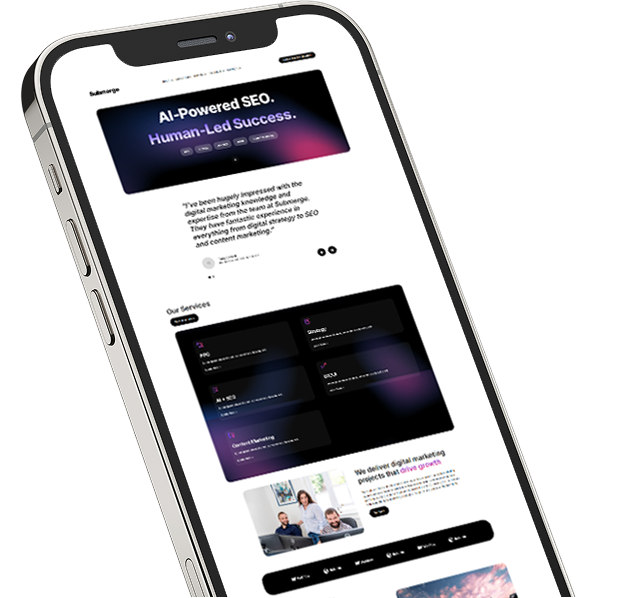
Digital marketing analyticsand performance tracking
Know what’s working.
Most businesses have more data than ever – but far less clarity. We’re a digital marketing analytics agency that helps brands set up, improve and connect analytics, tracking and reporting systems so marketing performance can be measured properly, understood clearly and improved with confidence.

Data experts for
analytics and tracking
Better marketing starts with better measurement.
Many businesses are running campaigns, publishing content and investing in digital channels without a clear view of what is actually working.
GA4 may be installed but not configured properly. Google Tag Manager may contain legacy tags that have been in place for years. Conversion events may be missing, duplicated or misfiring. Cookie consent may be unexpectedly blocking data. Campaigns may be tracked inconsistently. Dashboards may exist, but fail to answer the questions senior teams actually ask.
Submerge helps businesses build cleaner, more useful analytics and tracking foundations.
We’re a digital marketing analytics agency who are experts in configuring analytics platforms, event tracking, conversion measurement, tag management, cookie consent, dashboard reporting and KPI frameworks to help teams understand performance across channels, journeys and goals.
Good measurement is not about collecting more data.
It is about knowing:
- which channels are driving value
- which journeys are converting
- where users are dropping out
- which campaigns are performing
- where budget is being wasted
- and what needs to change next.
When tracking is clear, marketing teams can make better decisions – and senior stakeholders can see the commercial impact of digital activity.

SEMrush Agency Partner
We’re a fully Certified SEMrush Agency Partner – we know digital marketing analytics inside out, from Google Analytics to CRO, Adobe, Meta and social platforms.
WP Engine Agency Partner
We’re a Certified WP Engine Agency Partner – we build and upgrade WordPress websites with CRO, GA4, GSC and tracking platforms for atrribution clarity.

Cyber Essentials Certified
We’re Cyber Essentials Certified – Security-conscious technical delivery aligned with recognised UK cybersecurity standards.







Trusted by brands including










Analytics and tracking intelligence
GA4 & tracking setup
Analytics platforms often appear to be working long before they are actually useful.
GA4 may be collecting traffic data, but missing important conversion events, enquiry actions, ecommerce values, consent states, referral exclusions, cross-domain tracking or campaign parameters. Without proper setup, teams can easily make decisions using incomplete or misleading data.
We configure GA4 and broader tracking foundations based on how your business actually works. This includes event tracking, conversion setup, form submissions, phone clicks, ecommerce actions, user journeys, channel performance and goal measurement.
The result is cleaner, more reliable data that helps teams understand what is driving visibility, engagement, leads and revenue.
GA4 configuration
Event & conversion tracking
Form, phone & enquiry tracking
Ecommerce and goal measurement

Tag management
Google Tag Manager gives marketing teams more control over tracking – but without governance, it can quickly become messy, duplicated and unreliable.
Old tags, unused triggers, overlapping scripts, broken pixels and inconsistent naming conventions can all reduce data quality and increase technical risk. Consent platforms, advertising pixels, retargeting tags, and analytics scripts also need to work together properly to avoid under- or over-tracking or compliance issues.
We audit, clean and structure tag management setups so tracking is easier to manage and more reliable. This includes GTM container reviews, trigger configuration, dataLayer planning, pixel deployment, consent mode considerations and campaign tracking governance.
Good tag management creates a controlled measurement environment – not a black box of scripts no one wants to touch.
Google Tag Manager audits
Pixel and tag implementation
Trigger and event setup
Consent-aware tracking configuration

Dashboard reporting
Dashboards should make performance easier to understand – not create another layer of noise.
Many businesses have reporting spread across GA4, Google Search Console, Google Ads, Meta, CRM systems, SEO tools and spreadsheets. The result is often fragmented data, duplicated effort and unclear reporting for senior stakeholders.
We build bespoke dashboards that bring the right performance data into one clear view. Using tools such as Looker Studio, AgencyAnalytics, GA4, Google Search Console, SEMrush and SEOcrawl, we create dashboards tailored to business goals, channels, audiences and journeys.
The aim is simple: give marketing teams and decision-makers a reliable view of what is happening, why it matters and where action is needed.
Bespoke dashboard builds
GA4, GSC and SEO reporting
Channel and campaign reporting
Executive performance views

KPI measurement
Many businesses track activity, but not impact.
Traffic, impressions, clicks and rankings can all be useful indicators, but they do not automatically explain commercial performance. Without agreed KPIs, teams can become overwhelmed by data while losing sight of the outcomes that actually matter.
We help businesses define measurement frameworks that connect marketing activity to goals. This may include lead volume, enquiry quality, conversion rates, revenue, assisted conversions, audience engagement, content performance, campaign efficiency and channel contribution.
Strong KPI measurement gives teams a shared view of success. It helps prioritise activity, challenge assumptions and focus reporting on the metrics that drive better decisions.
KPI framework development
Goal and outcome mapping
Channel performance measurement
Commercial reporting alignment


Data should create clarity, not confusion.
Most businesses do not lack data. They struggle with disconnected systems, inconsistent tracking and unclear reporting. GA4, Google Ads, Search Console, social platforms, CRM systems and SEO tools each tell part of the story, but rarely in a way that supports confident decision-making.
The best measurement systems reduce noise.
They connect marketing activity to business outcomes, highlight the journeys that matter and make performance clearer for the people who need to act. That means tracking the right events, defining useful KPIs and building dashboards around decisions, not data volume.
Start with an analytics and tracking review
Understand whether your analytics and tracking setup provides a reliable view of performance.
We assess GA4 configuration, Google Tag Manager setup, conversion tracking, event tracking, consent and cookie impact, campaign tracking, dashboard reporting and KPI alignment
Visibility success stories

Opportunity Green
Learn how Submerge redesigned and developed Opportunity Green's new WordPress website to support tackling climate change.

Bill Wyman
Explore our web design and content marketing work with Bill Wyman, former bass player with the Rolling Stones. Full site design and build.

Ascentor
Discover our work with Ascentor. Learn how our web development delivered impressive results, driving Ascentor's online growth and success.

Orion Registrar, Inc.
Read our web development and migration case study detailing how Submerge transformed Orion Registrar's website with a focus on SEO.

ISO 9001
Building global search visibility for a certification leader – 312% organic traffic growth and 400% CTR boost in six months.

Laithwaites
Learn how Submerge worked with Laithwaites UK team boosting SEO, content strategy, and performance monitoring for success.
You cannot improve what you cannot measure.
Digital marketing produces huge volumes of data, but not all data is useful. Senior teams need clarity on what is driving traffic, leads, customers and revenue – while marketing teams need enough detail to understand channels, journeys and performance trends.
Strong analytics and tracking turn fragmented data into actionable intelligence. With the right foundations in place, businesses can see which activity is creating value, where users are dropping out and what should be optimised next.
70%
The percentage of business who report higher ROI using AI for SEO.
13
The current size of an average B2B buying committee.
92%
Of marketers use automation for data analysis and reporting.
56%
Of marketers say it’s easier to improve leads than 10 years ago.

“It’s been a great experience and achievement and so glad that we chose Submerge. I’m so proud of what we have achieved as a team working together to pool our passion, expertise and strengths.”
Mike Stevens
CEO, Praxis42
Say hello to Submerge

Matthew Bath

Lynn Wright

Marc Bodger

Aimee Lashko-Sayers

Lara Palamoudian

Nicole Percival

Jesse Hopkins
Measurement expertise built for clearer decisions.Book a consultation
Discover our latest guides, advice and insights
for analytics, tracking and performance measurement

0 Comments22 Minutes
SEO copywriting checklist for in-house editors
Improve your in-house content with a practical SEO copywriting checklist that improves clarity, search visibility and…

0 Comments17 Minutes
Your guide to the new Google search bar in 2026
Google underwent a major update to keep up with changing search behaviour. Learn how this could impact your business and…

0 Comments17 Minutes
What Google’s new AI version of search means for your business’s visibility
Google Search is changing to better fit its users' changing needs and expectations. Learn how this change will impact your…
Analytics and tracking FAQs
Analytics and tracking show whether marketing activity is actually delivering value.
Without reliable measurement, teams often rely on assumptions, partial data or platform-reported metrics that do not tell the full story. A campaign may look successful in one platform because it generated clicks, but that does not necessarily mean it produced qualified leads, revenue or meaningful engagement.
Good analytics connects channels, users, journeys and outcomes. It helps businesses understand where traffic comes from, what users do on the website, which touchpoints contribute to conversions and where performance can be improved. For marketing directors and managers, this creates a clearer basis for budget decisions, campaign planning and board-level reporting.
Related expertise:
- GA4 & tracking setup
- KPI measurement
- Dashboard reporting
GA4 should be configured around meaningful user actions and business outcomes, not simply page views.
For most businesses, useful tracking may include form submissions, phone clicks, email clicks, downloads, newsletter sign-ups, video engagement, ecommerce actions, account registrations, quote requests, booking journeys and key content interactions. For ecommerce or lead generation websites, conversion events should be clearly defined and aligned with commercial goals.
GA4 should also be configured carefully to avoid misleading data. This may include referral exclusions, internal traffic filters, cross-domain tracking, enhanced measurement review, consent mode considerations, event naming conventions and conversion validation. The aim is to create a measurement setup that reflects how users actually move through the website and where value is created.
Related expertise:
- GA4 configuration
- Event & conversion tracking
- Journey measurement
Google Tag Manager is a tag management system that allows analytics scripts, advertising pixels and event tracking to be managed from a central container.
It is commonly used to deploy GA4 events, Google Ads conversion tracking, Meta pixels, LinkedIn Insight Tags, remarketing tags, cookie consent integrations and custom tracking scripts. GTM can make tracking more flexible, but only when it is structured properly.
Poorly managed GTM containers can create serious reporting problems. Duplicate tags, overly broad triggers, old scripts, inconsistent naming and untested changes can all distort analytics data. A well-managed GTM setup should include clear naming conventions, controlled triggers, tested events, documentation and appropriate governance so teams understand what is firing and why.
Related expertise:
- Google Tag Manager audits
- Pixel implementation
- Consent-aware tracking
Cookie consent can significantly affect analytics and advertising data.
If non-essential cookies are blocked before consent, analytics platforms may record fewer users, sessions or conversions than expected. If consent mode is configured incorrectly, data can become inconsistent or incomplete. Different users may also be tracked differently depending on whether they accept, reject or customise cookie settings.
This does not mean cookie compliance and good measurement are incompatible. It means tracking needs to be designed with consent in mind. Cookie platforms, GTM, GA4, advertising pixels and consent mode settings should be reviewed together so the business understands what is being measured, what is being modelled and what may be missing from reports.
Related expertise:
- Cookie and consent tracking
- GA4 consent mode review
- Tag management setup
A good marketing dashboard answers useful business questions quickly.
It should show the metrics that matter for the audience using it. A marketing manager may need detailed channel, campaign and journey data. A marketing director may need a clearer view of growth, efficiency, lead quality and budget performance. A board or leadership team may need a concise view of outcomes, trends and commercial impact.
Effective dashboards avoid data overload. They group metrics by decision, not just by platform. For example, a dashboard might show acquisition by channel, conversion rate by journey, organic visibility trends, paid media efficiency, top landing pages, assisted conversions and goal completions. The best dashboards are clear enough to use in meetings, but detailed enough to support action.
Related expertise:
- Bespoke dashboard builds
- Executive reporting
- Channel performance reporting
The right KPIs depend on the business model, website role and marketing objectives.
For a lead generation business, useful KPIs may include qualified enquiries, form submissions, phone calls, conversion rate, cost per lead, organic visibility, landing page performance and assisted conversions. For ecommerce, KPIs may include revenue, transactions, average order value, conversion rate, channel revenue, cart abandonment and product performance. For awareness-led campaigns, reach, engagement, search demand and audience growth may also matter.
The important point is that KPIs should connect activity to outcomes. Rankings, clicks and impressions can be helpful indicators, but they are not always enough. Strong KPI frameworks help teams understand whether marketing is creating visibility, engagement, demand, leads, customers or revenue.
Related expertise:
- KPI framework development
- Goal mapping
- Commercial performance reporting
Connecting marketing activity to revenue usually requires more than basic website analytics.
GA4 can track ecommerce revenue and conversion events, but many lead generation businesses also need CRM integration, offline conversion tracking, call tracking, enquiry quality scoring or manual sales data to understand commercial outcomes. Without this connection, teams may know which channels generate leads but not which channels generate valuable customers.
A practical measurement framework starts by defining the user journey and identifying where commercial value is created. From there, tracking can be configured around key actions, lead stages, source attribution, campaign parameters and reporting views. The aim is to move from “how much traffic did we get?” to “which activity created valuable business?”
Related expertise:
- Revenue attribution
- CRM and lead tracking
- Conversion measurement
Data overload happens when teams have access to lots of metrics but little clarity.
Modern marketing platforms produce huge volumes of data. GA4, Search Console, Google Ads, Meta, LinkedIn, SEO tools and CRM systems all report performance differently. Without structure, teams can spend more time interpreting dashboards than making decisions.
Good reporting reduces complexity. It prioritises the metrics that support business goals, separates diagnostic data from executive reporting and makes trends easier to understand. The aim is not to remove detail, but to organise it so that different teams can see what matters to them.
Related expertise:
- Dashboard reporting
- KPI measurement
- Marketing intelligence
Submerge uses a range of analytics, SEO and reporting tools depending on the client’s goals, platforms and measurement needs.
Common tools include GA4, Google Search Console, Google Tag Manager, Looker Studio, AgencyAnalytics, SEOcrawl, SEMrush and platform-specific advertising or social media reporting systems. These can be connected through native integrations, APIs or bespoke dashboard structures to provide a clearer view of performance.
The tool itself is rarely the strategy. The important work is deciding what should be measured, how data should be interpreted and how reporting should support better decisions. We use tools to create clarity, not to overwhelm teams with more dashboards.
Related expertise:
- API-connected reporting
- GA4 and GSC dashboards
- SEO and channel reporting
If you’re not visible
nothing else matters.
Let’s understand where you stand today – and where the opportunities are.
Get in touch and let’s chat about your project.